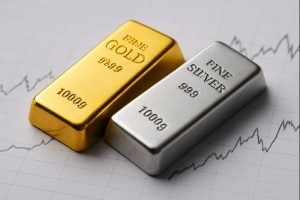
The enduring appeal of gold lies in its status as the original base money, offering an indispensable counterpoint to the volatile world of paper and digital assets. Understanding gold requires moving beyond simplistic critiques, such as the obsolete view that gold has no intrinsic value, a concept rooted in outdated Marxian economics that economists abandoned in favor of subjective value theory nearly 150 years ago,,. In fact, gold functions inherently as an interdisciplinary object; its suitability for money is demonstrable through chemistry, due to unique physical properties like malleability, inertness, durability, and scarcity and material constraints that distinguish it from nearly all other elements on the periodic table,,. Wiser societies instinctively grasped these qualities, grounding gold’s enduring nature in cultural memory and collective belief.
Unlike risk assets, gold functions as true money, defined by its role as a store of value, and therefore yields no return or yield,,. This perceived drawback is actually a strength, providing gold and long-term value by preserving wealth regardless of inflation or deflation,. This stability makes gold the anti-complex asset, acting as insurance against risks inherent in today’s interconnected financial systems,. This is crucial because the economy is not a predictable equilibrium system, but a complex one, meaning unexpected outcomes are inevitable. When market volatility accelerates, gold’s resilience shines, proving its worth in gold in times of crisis and against modern threats like cyber financial wars, as it is physical and cannot be hacked or erased,,. The necessity of gold as a hedge is amplified by the financialization of the economy, where value is increasingly extracted through complex financial transactions rather than productive growth, necessitating “pseudo money” like derivatives which leverage the physical gold market by up to 100 times.
While political authorities publicly disparage gold, dismissing it as a relic, the metals persist as a hidden asset anchoring institutional trust,. For instance, the solvency of the Federal Reserve itself relies on the hidden value of its gold certificate account, serving as an implied backing for the dollar,. The system is built on confidence, and when that wanes, gold’s value rises as people abandon depreciating paper money,. Furthermore, the lack of growth in new gold production (about 1.6% annually) is resisted by critics not because it inhibits real growth, but because it restricts inflation, which is the preferred policy of socialists and progressives who favor income redistribution—a policy that transfers wealth from savers and the poor to debtors and the government, thereby relating inflation directly to social inequality.
Globally, the accumulation of gold remains a critical measure of political power. Countries like China and Russia are rapidly increasing their reserves to enhance their gold-to-GDP ratios, recognizing that gold acts as “poker chips” in preparation for the inevitable global monetary collapse and subsequent restructuring,,. This behavior demonstrates that gold retains its role as a powerful, if quiet, social institution in international affairs, even though the U.S. attempts to leverage dollar hegemony through sanctions,. The history of monetary systems collapsing every few decades suggests a new global monetary reset is approaching. Examining structural limits of gold narratives reveals that objections based on insufficient supply are flawed; there is always enough gold if the price is correctly adjusted relative to the money supply. When the next collapse occurs, the world will likely turn to gold again—perhaps through a gold-backed Special Drawing Right (SDR)—necessitating a massive upward price adjustment, potentially to $10,000 per ounce or higher, to restore confidence and prevent deflation,,. This path towards gold and future monetary systems is inevitable given the inherent instability and complexity of the current financial order.